AI & Humans Coexisting

Updated: Jan 18
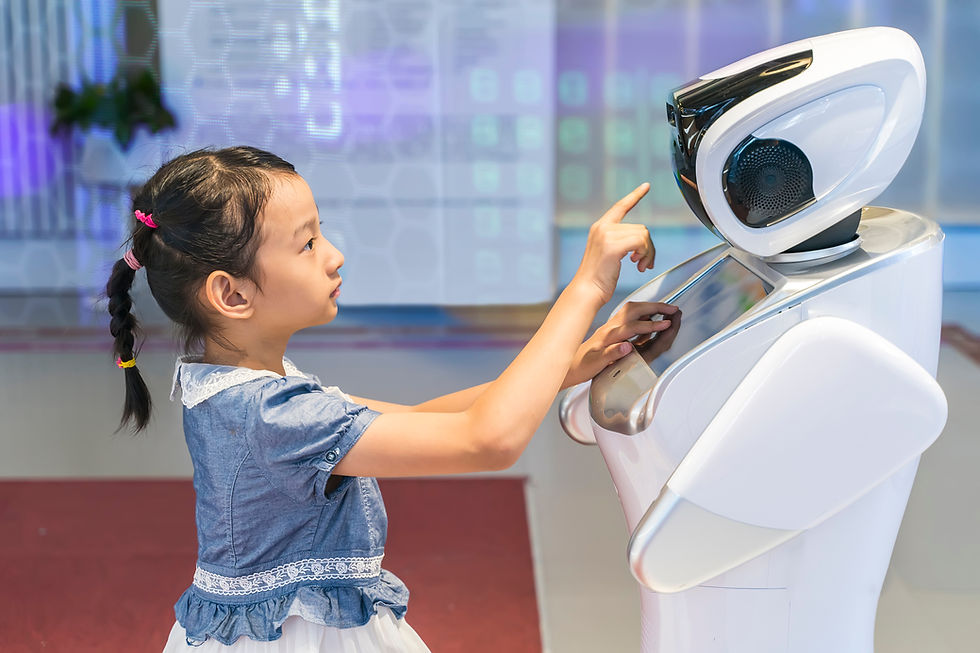
When AI Becomes Invisible: Is Technology Helping Us… or Replacing the Human Touch?
Artificial intelligence is no longer a set of flashy tools, it’s quietly becoming part of the infrastructure of daily life. At major tech events and industry summits in late 2025 and early 2026, the most notable trend wasn’t spectacular prototypes but AI embedded into everyday tools, smartphones, wearables, cars, appliances, and enterprise software, often operating without fanfare. This shift toward ambient or “invisible” AI is widely expected in 2026: AI systems are becoming ambient services that work behind the scenes, blending into user experiences rather than standing out as separate features.
AI is everywhere… but you might not even notice it.

People today are more captivated by real-world impact than technical specs. AI-powered capabilities from predictive text and personalized recommendations to automated workflows and voice assistants have become so integrated and familiar that many users don’t realize they are using AI at all. For example, a survey reported that 90% of Americans use AI on their phones daily but only 38% recognize it as AI.
Are we better off when technology stays invisible or is the human experience fading too quietly?
This article goes beyond AI capabilities. It invites reflection on society, creativity, labor markets, privacy, authenticity, human agency, and what it means to co-exist with machines.
Key Trends Shaping AI in 2026
Below are fact-aligned trends reshaping tech, work, and culture:
AI as Infrastructure, Not Spectacle
In 2026, AI is shifting from being a headline magnet to functioning as the underlying engine of digital systems. Enterprises are focusing on scaling AI from pilots to everyday workflows, deeply integrating models into business logic rather than treating them as experiments.
The Invisible Impact on Jobs and Society
Experts agree AI is transforming work faster than many expected and this transformation is not uniform. Organizations increasingly automate routine tasks in finance, customer service, and operations, raising concerns about workforce displacement and job redesign. However, many forecasts also predict net job creation driven by new roles requiring human judgment, creativity, and complex decision-making.
Convenience vs. Authenticity
Generative AI automates writing, design, and decision support, bringing convenience, but also deeper questions about meaning, originality, and the value of human expression. This tension between efficiency and authenticity is central to cultural debates about AI’s role in creative industries.
Invisible AI in Everyday Platforms
Social networks, content platforms, and apps are increasingly using AI to tailor feeds, moderate material, recommend content, and shape engagement, often without users realizing how heavily they’re influenced by algorithmic intelligence.
“Technology is becoming invisible, not because it’s hidden, but because we’ve normalized it. When AI is part of every experience, does it make us more human… or does it make human uniqueness optional?”

Impact Focus (Social / Professional)
“In 2026, AI is not just a ‘tool’ anymore, it’s the infrastructure powering everyday tech. But as it fades into the background, what happens to human skills, jobs, and creativity?”
Framing the AI Human Equation

AI’s dominance isn’t futuristic, it’s current reality. AI touches how we work, learn, create, communicate, and even govern digital systems. Headlines consistently highlight both productivity gains and potential societal risks:
Government leaders warn AI could transform jobs and productivity, but also stress the risk of unemployment without supportive policy action.
Research shows AI is reshaping labor demand, with certain roles automated and others enhanced by tech, increasing the importance of complementary human skills.
Invisible AI adoption is growing so rapidly that many users don’t even recognize when they engage with it.
Reality Check: Not Everyone Is Running the Same Race

The AI narrative often assumes a level playing field, but real life is far more nuanced. People are at different stages of career and life, with varying access to time, energy, and resources. Not everyone will or should become a “tech-first” adopter. That’s okay. Adaptation means intentional alignment with AI, not blind adoption.
Reframing the Central Question
Instead of asking “Will AI replace me?”, a more productive question is:“Where does AI support me, and where am I irreplaceable?”
AI excels at:
Speed and scale
Pattern recognition
Repetition and automation
Data-driven decisions
Humans excel at:
Context and judgment
Empathy and ethics
Creativity rooted in lived experience
Human connection and meaning
The future is not AI versus humans, it is AI with humans, each complementing the other.
Practical Adaptation (Without Overhaul)
You don’t need to sprint to survive this era, just find your lane:
Adopt selectively: Focus only on tools that genuinely help you.
Learn just enough: Basic AI literacy is often sufficient to stay confident.
Use AI as assistant, not identity: Let it reduce load, not define worth.
Honor your life stage: Progress is personal, not comparative.
Protect enduring human skills: Storytelling, ethics, leadership, and critical thinking remain in high demand.
Finding Your Place and Pace

Your place isn’t defined by speed of adoption but by the clarity of your purpose. Some will build AI systems. Some will manage them. Some will use them quietly. Some will resist them and all have meaningful roles to play.
There is dignity in every thoughtful approach.
Finding your pace, not chasing every innovation, is an act of self-respect.
It’s okay to pause.
It’s okay to learn deeply, not quickly.
It’s okay to let technology serve your life, not consume it.
The most important intelligence we carry forward is human.

Conclusion
AI’s role will continue evolving, but humans are not becoming obsolete. We are becoming more intentional. The future belongs not just to those who move fast, but to those who move with clarity.
Thought-Provoking Reflection
“While we are all talking about tech adoption, digital culture, and their real-world impact, we are beginning to realize that technology is becoming invisible, not because it’s hidden, but because we’ve normalized it. Does this make us more human, or does it make human uniqueness optional? As technology fades into the background, what happens to human skills, jobs, and creativity? How can the human touch surpass a rapidly advancing AI? And do we really need to see AI as a competitor, or could it be an assistant, or even a collaborator?”